

Why Most B2B Blogs Don’t Generate Pipeline
And How a Simple Structured Shift Turns Content Into a Reliable Growth Engine in 2026

Last quarter, I watched a B2B team publish 18 blog posts.
Traffic climbed.
Engagement looked healthy.
The content dashboard glowed green.
But when we checked the sales pipeline?
Flat.
Not slightly disappointing, completely flat.
The content was well-written. The topics felt relevant. The team was consistent. On paper, they were doing everything “right.”
Yet nothing was moving into the sales funnel.
That’s when we discovered the hidden problem.

The Real Reason Most B2B Blogs Fail
It wasn’t the quality of the writing.
It wasn’t the design or the headlines.
The problem was the lack of structure.
They were publishing random acts of content, one trend piece here, a how-to guide there, a product update whenever it felt right. Each post stood alone. There was no plan, no journey, and no clear connection to where buyers actually were in their decision-making process.
This is incredibly common in B2B.
Random content feels productive. You’re shipping regularly. You see some traffic. Your brand feels active. But when you ask the hard questions, “Are we generating qualified leads? Are prospects moving forward? Is content influencing pipeline?” the answers are vague or disappointing.
Because random publishing builds awareness at best. It rarely builds momentum.
Why Random Content Wastes Effort
When we mapped their previous three months of posts, the issue became obvious:
Over 80% of the content was Top of Funnel (TOFU), broad awareness pieces.
Very little addressed Consideration (MOFU) or Decision (BOFU) stages.
No intentional progression from one post to the next.
Generic CTAs that didn’t match the reader’s stage.
Buyers don’t wake up and instantly buy. They move through stages:
Awareness: “I have a problem. What’s causing it?”
Consideration: “What are the possible solutions? Which ones actually work?”
Decision: “Which option is best for me? What’s the next step?”
If your content doesn’t speak to these stages in a balanced, intentional way, readers consume one or two pieces and disappear. They never get nurtured toward a conversation.
The Shift That Changes Everything: Monthly Mapped Content with Funnel Alignment
We didn’t reduce volume. We didn’t overhaul the writing process.
We introduced one disciplined practice: monthly content mapping with deliberate funnel distribution.
Here’s exactly how it works:
1. Monthly Mapping Session (Do This Every Month)
At the end of each month, block 2–3 hours to plan the next month’s content. Use a simple calendar that forces you to assign every post to a funnel stage.
2. Balanced Funnel Distribution (The Most Important Part)
Aim for this mix every month:
TOFU (Awareness): 40–50%
→ Educational, problem-aware content that attracts new visitors.
Example: “The Biggest Lead Generation Challenges in 2026”MOFU (Consideration): 30–40%
→ Deeper, solution-focused content that builds trust.
Example: “Intent Data vs Traditional Lead Lists: A Real Comparison”BOFU (Decision): 15–25%
→ Content that helps buyers choose and take action.
Example: “How to Evaluate Sales Intelligence Tools – A Buyer’s Checklist”
This balance is crucial. Without it, you attract interest but fail to convert it.
3. Build Topic Clusters Around Your Expertise
Group content around core pillars (e.g., Intent Data Strategies, Modern Lead Generation, Sales Intelligence Trends, Data Quality). This builds SEO authority and creates natural reader journeys.
4. Stage-Specific CTAs
TOFU → Download a free report or checklist
MOFU → Request a sample audit or framework
BOFU → Book a short strategy call
What Happened After the Shift
Within 60 days, the results were noticeable:
Leads began referencing specific articles in sales conversations.
Prospects arrived better educated.
Sales cycles shortened because content had already done the heavy lifting.
Blog-to-lead conversion improved significantly.
Traffic didn’t explode overnight, but pipeline contribution rose steadily. Content stopped being just “content”, it became a directional tool that guided buyers forward.
The Metrics That Actually Matter
Stop obsessing over page views and social shares. Track these instead:
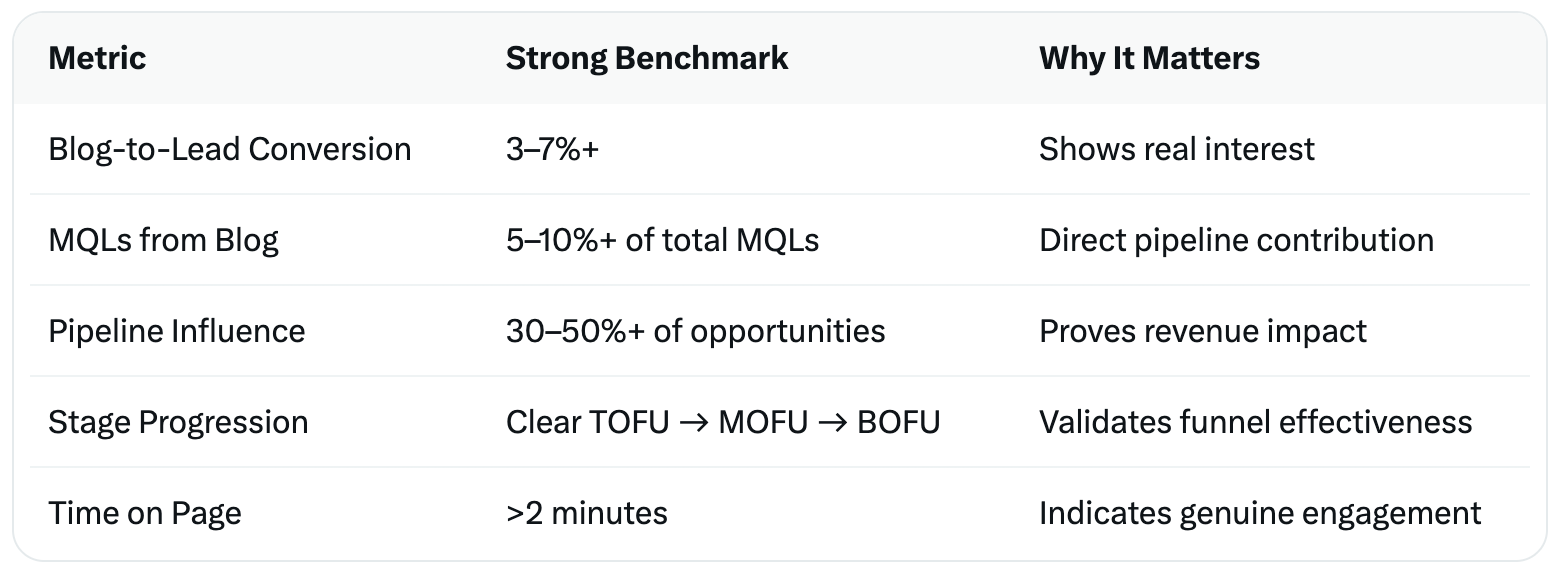
Review these every month and adjust your next mapping session accordingly.
Final Truth
Most B2B teams don’t have a content problem.
They have a structural problem
Random content keeps you visible.
Mapped, funnel-aligned content makes you effective.
Buyers move in stages. Your content should too.
Your Next Move (Start This Week)
Block 2–3 hours on your calendar.
Map next month’s posts with clear TOFU/MOFU/BOFU distribution.
Align CTAs to each stage.
Publish consistently and track the right metrics.
You don’t need more content. You need a system that turns content into movement.
If you’re in B2B sales, marketing, or lead generation, I share more practical playbooks on content strategy, intent data, and turning thought leadership into pipeline. Subscribe below so you don’t miss them.
What’s one content challenge you’re facing right now? Drop it in the comments, I read every one.